Week three is when the fade stops reading.
A fade grows out before the length does. The interval is set by the taper, not the top — so this desk measures the weeks after the chair in millimetres, not mood. No selling, no slogans, just the climb.
No booking, no checkout, no account. Grainline is a guide, not a store — nothing here is sold or reserved.

A cut doesn't grow out all at once. It grows out from the bottom.
Hair comes in at roughly two and a half millimetres a week. On the top that's nothing you'd notice for a month. At the nape, where a fade meets skin, it's the difference between a clean gradient and a soft smudge. Here's the climb, week by week.
-
Week 0 · fresh
Hard edge, clean skat
The line-up is a drawn edge; the taper is a clean fall from skin to top. Everything reads.
-
Week 1 · +2.5 mm
Only the nape tells
Nothing reads on the top yet. The fuzz coming back along the neck is the first and only tell.
-
Week 2 · +5.0 mm
The bare band fills in softening
On a skin fade the bald part at the bottom starts to carry colour again. The hard edge rounds off first.
-
Week 3 · +7.5 mm
The gradient stops reading the pivot
This is the week people notice. The steps of a skin fade blur into one middle length. The shape is still there; the contrast is gone.
-
Week 4 · +10 mm
Taper holds, skin fade doesn't
A taper is still legible — there was never bare skin to fill. A skin fade off the same guard has grown past its read.
-
Week 6 · +15 mm
A memory of the shape grown out
Weight is back on top; the sides carry weight too. Back in the chair, or you're growing it out on purpose now.
Your week, your numbers.
Enter the day you last sat down and the guard used on the sides. The desk lays out the regrowth in millimetres, flags the week the shape stops reading, and gives an honest date to go back. runs in your browser
A number on its own means little — the same guard leaves different millimetres on different clippers. no.1 ≈ 3 mm
Shaded weeks still carry the gradient. By week 4 a skin fade has usually grown past its read.
Foam is not the point. The scalp is.
The weeks after a cut are when people wash it the most and need to the least. Short hair holds almost no oil. Over-washing a fresh fade dries the scalp and makes the regrowth look flakier than it is. holds two weeks
- 1Two or three washes a week is plenty. Rinse daily with water if you train, but save shampoo for when the scalp is actually oily.
- 2Finish cool. A cold rinse closes the cuticle and the cut sits flatter. Hot water lifts it and the top looks fluffy.
- 3Let product follow the growth. Week one needs nothing. By week three a matte clay gives the softening top some hold back.
- 4Towel, don't rub. Rubbing short hair in different directions is what makes a clean nape look scruffy a day after a wash.

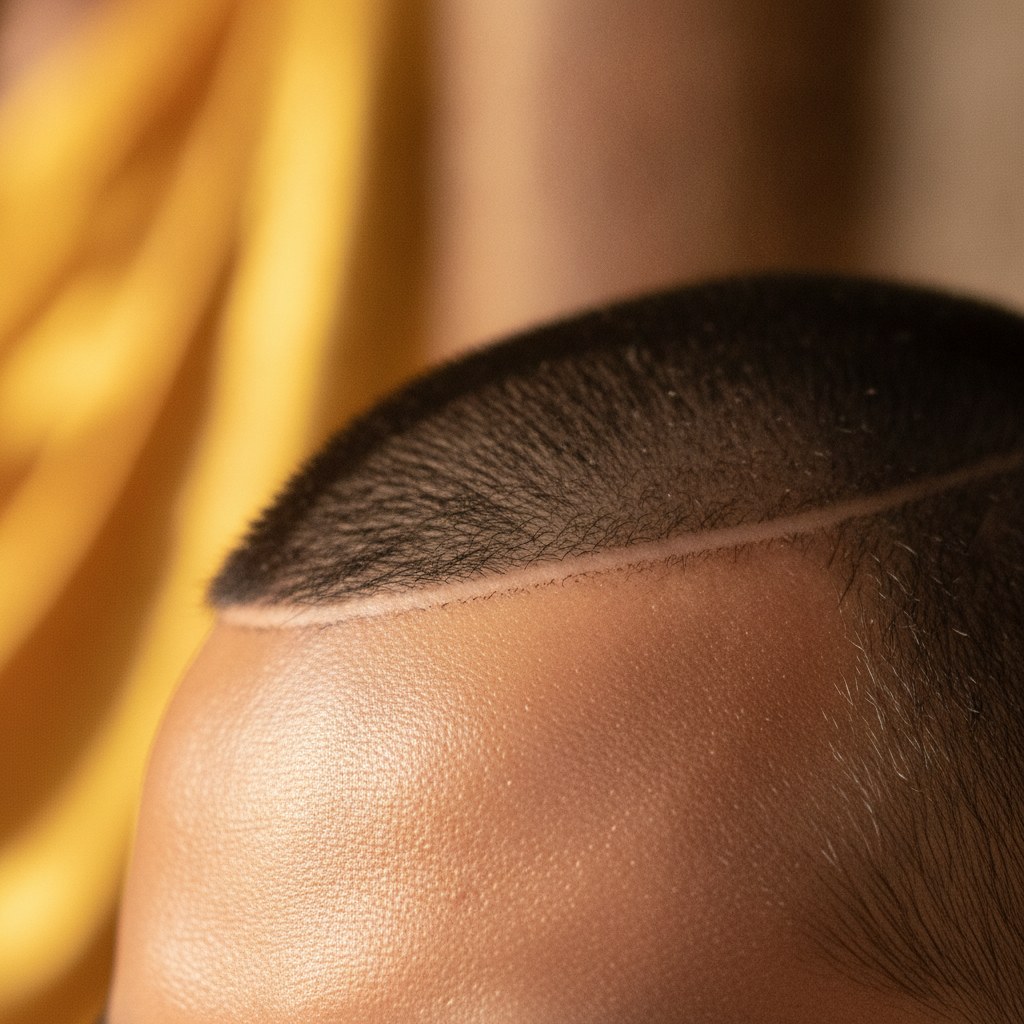
The edge goes before the length does.
A line-up is a drawn edge, not a grown one — so it's the first thing to blur. You can stretch the look of a cut for a week or two by keeping the perimeter honest, and lose it in a minute by taking a razor to it yourself. needs a line
Leave the line-up alone. A line that's been pushed back twice at home sits a centimetre into the hairline by the next real cut. If the nape bothers you between visits, a dry neck tidy with a trimmer — no fresh edges — buys you time without moving the line.
Honest intervals, not a subscription.
There's no universal three weeks. The interval is set by how much contrast your cut started with and how fast you grow. The sharper the starting fade, the shorter the honest window — a skin fade has the furthest to fall. skin ≈ 3 weeks
| If you asked for | Reads clean | Still acceptable | Grown out by |
|---|---|---|---|
| Skin / bald fade | ~2 weeks | 3 weeks | 4 weeks |
| Low / mid taper | ~3 weeks | 5 weeks | 6–7 weeks |
| Scissor-cut sides | 3–4 weeks | 6 weeks | 8 weeks |
| Beard line-up | ~1 week | 2 weeks | 3 weeks |
A skin fade reads sharp for about three weeks and no longer — the bare band at the bottom is the first thing to fill in, and once it carries colour the gradient is a suggestion. If you want the look to last, ask for a taper instead of skin: it hides its own regrowth because there's nothing bare to grow back.
Wet hair sits shorter than it cuts. What looks right at the basin can read a touch long once it dries and lifts — worth saying before you count the weeks. +0 to 2 mm dry
What the desk measures.
Average scalp regrowth. Yours is your own — the tool lets you set it slow, average or fast.
Shapes described and photographed for Issue 07, each tracked through its grow-out.
The honest window before the gradient blurs into one middle length.
What this reading room won't do.
A guide earns trust by naming its own edges. Here are the things the weeks, the table and the calculator can't fix for you.
-
01
A skin fade won't hold a month
It reads sharp for about three weeks. skin ≈ 3 weeks If your schedule can't match that, the honest answer is a taper, not a sharper fade.
-
02
A home line-up grows back crooked
A line drawn above the natural hairline grows out uneven and keeps climbing. leave it alone A trimmer on the nape is fine; a razor on the temples is not.
-
03
You can't cut your own nape straight
The back of your own head is the one place you can't see to level. 2 min to regret Tidy, don't reshape — and stop before you chase a line.
-
04
Thinning hair is a doctor's question
Hair that's thinning or a scalp that's sore and flaking belongs with a doctor, not a barber or a calculator. see a professional This desk talks about shape and regrowth, nothing medical.
Questions from the mirror.
6 questions
How fast does hair actually grow?
Scalp hair averages about a centimetre and a quarter a month — call it 2.5 mm a week. It's an average, not a promise: diet, age, genetics and the season all nudge it. The calculator lets you set slow, average or fast so the weeks line up with your own head rather than a textbook.
Why does a skin fade grow out faster than a taper?
A skin fade starts with bare skin at the bottom and a full gradient climbing up. The read depends on that contrast. As soon as the bare band fills in — about two weeks — the steps start to blur. A taper never exposes skin, so there's nothing to fill back in; it carries its shape for weeks longer off the same guard.
Do guard numbers mean the same on every clipper?
No, and this trips people up. A number two on one clipper can leave noticeably more length than a number two on another, and tapered lever guards change again. That's why this guide talks in millimetres wherever it can. If you know the mm your barber leaves, use that; the guard number is a shorthand, not a standard.
Can I tidy the line-up myself between cuts?
You can tidy the nape with a trimmer — carefully, no new edges. What you shouldn't do is re-draw the line-up at the temples or forehead. A line-up is a drawn edge, and every time it's pushed back it eats into the hairline. Two home edge-ups and your next real cut starts a centimetre too high.
Is the calculator exact?
It's honest, not exact. It uses average growth rates and the physics of how a fade loses contrast — not a measurement of your head. Treat the dates as a window, not a deadline. If your hair surprises you, adjust the growth setting and the whole rail shifts with it.
Can I arrange a visit through this site?
No. There's no booking, no checkout and no account here — this is a reading room, not a store. Everything on the page is reference only, and the calculator runs entirely in your own browser. If you'd like to reach the desk, the contact page has a message form, a phone number and an address.
Notes from the desk.
- 23 Nov 2026Added the taper row to the return table after a month of readers asking why their mid fades outlast their skin fades. Short version: no bare skin, no fast grow-out.
- 02 Nov 2026Reworked the washing section. The old advice leaned too hard on product; the real fix for a flaky-looking fade is washing it less and finishing cool.
- 14 Oct 2026The regrowth tool now flags fast growers and knocks days off every return window. Built after too many “mine grows quicker than that” emails.
Who writes this Between Cuts is edited and measured by the three people behind the Between Cuts desk in Kadıköy. Corrections are welcome.